
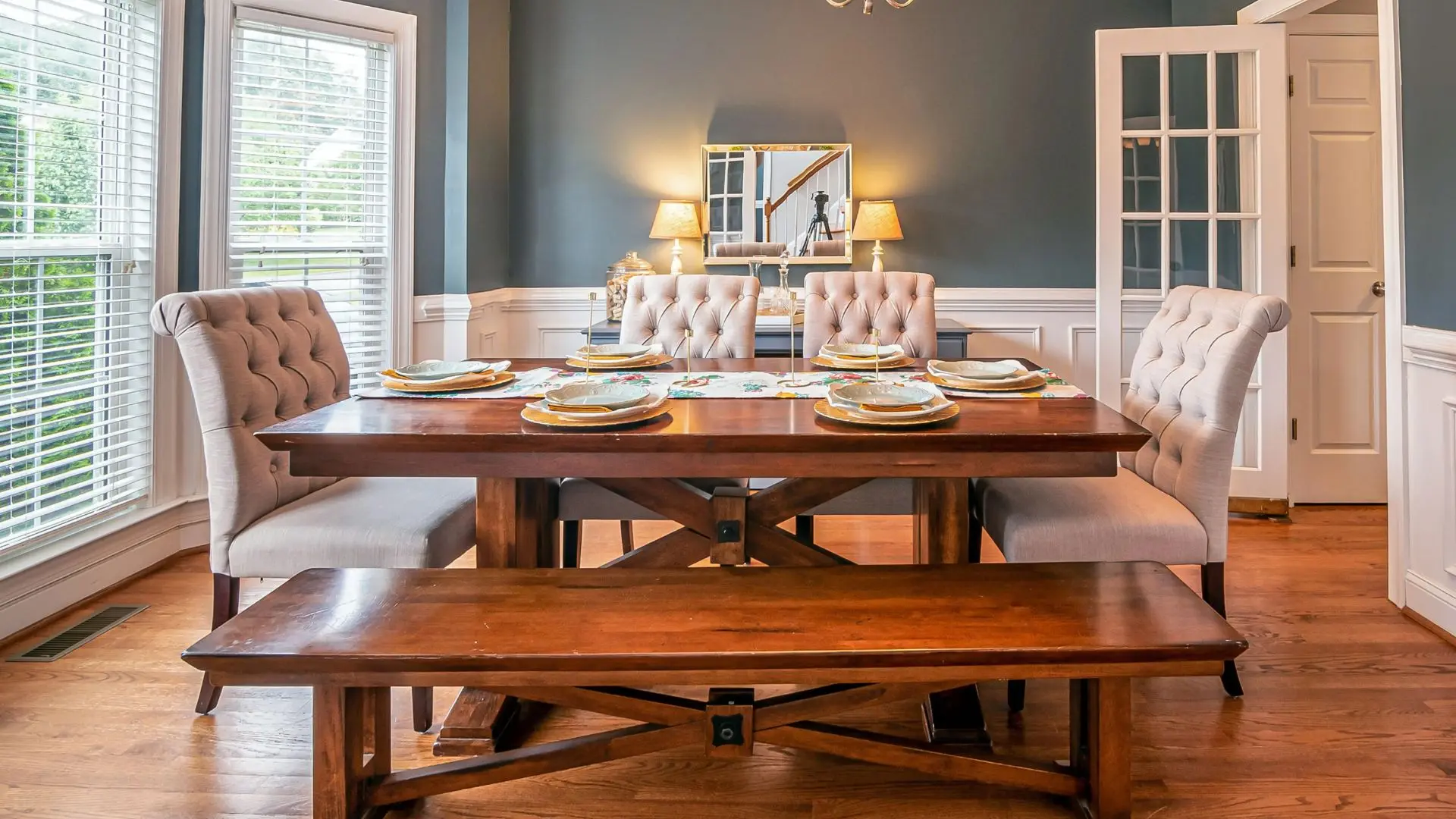
The short answer
- Round table, about 36 to 40 inches: 2 chairs every day, 4 for a quick breakfast. Start with a set of 2.
- Round table, 42 to 48 inches: 4 chairs with real elbow room. Get a set of 4.
- Rectangle, 60 to 63 inches: 4 chairs on the long sides. Most tables this size are 30 to 32 inches wide, too narrow for armchairs at the ends. Get a set of 4.
- Rectangle or oval, 70 to 72 inches: 6 chairs. Get a set of 6.
- Rectangle, 79 inches and wider than 36 inches: 6 armchairs on the long sides, plus an armless chair at each end for 8.
- Armchairs and barrel chairs need about 26 to 28 inches each, not 24. Count one chair fewer if the math is tight.
Rule 1: give each person about 24 inches of table edge
Most designers plan 18 to 24 inches of table edge per person[1], and 24 inches is the comfortable everyday number[3]. Chairs with arms take more room than armless ones, so plan extra width for them[3]. I use 26 to 28 inches for an armchair.
- Rectangle: divide the length by 24 for each long side, then decide about the ends.
- Round or oval: multiply the diameter by 3.14 to get the edge, then divide by 24 (or 26 for armchairs).
Example: a 47.5-inch round table has about 149 inches of edge. That is 6 armless chairs on paper, 5 armchairs, and 4 armchairs with room left for platters. Paper math always runs a little generous, so round down.
Rule 2: leave 36 inches behind every chair
Keep at least 36 inches between the table edge and any wall or furniture[2]. That is the space a chair needs to pull out and someone needs to walk behind it. If the path is a main walkway, 42 inches feels better.
To check the room, add 72 inches to the table size in each direction. A 47.5-inch round table needs a space of about 120 by 120 inches, or 10 by 10 feet. The 70-inch oval table below is 31.5 inches wide, so it needs about 143 by 104 inches, roughly 12 by 9 feet.
Rule 3: look under the table
The base changes the count. Pedestal and trestle tables fit more people than tables with a leg at each corner[1], because nobody straddles a leg. A round table on a single pedestal is the easiest place to squeeze in one extra chair. Four legs near the edge, or a wide base, usually fix the count at 4.
Barrel chairs: the measurement people miss
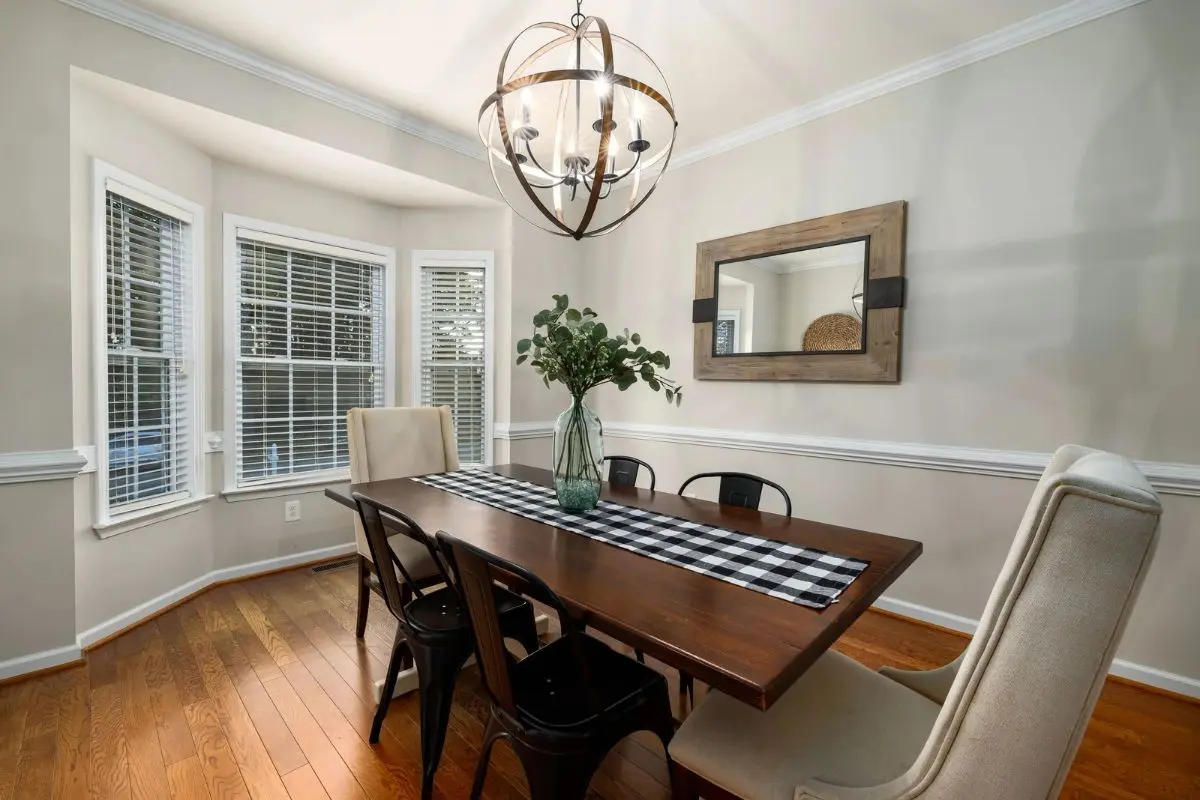
A barrel chair has a curved back that wraps into the arms. It is comfortable and it looks great in a set, but it rarely slides under the table. The chair in this guide lists these measurements:
| Measurement | Chair |
|---|---|
| Overall height | 29.5" |
| Seat height | 19.5" |
| Seat width | 20.5" |
| Depth | 22.5" |
| Seat foam | 5.5" thick |
At 29.5 inches, the curved back sits at the height of the tabletop or above it (the four tables below are 29 to 30 inches tall), so the chairs stay at the table edge instead of tucking under. Two things follow. Keep the full 36 inches behind them, and count 26 to 28 inches per chair around the table.
Which set for which table
| Table | Edge | Barrel chairs | Set |
|---|---|---|---|
| 39.3" round, pedestal | About 123" | 2 every day, 4 snug | Set of 2 |
| 47.5" round, four legs | About 149" | 4 comfortably | Set of 4 |
| 63" x 31.5" rectangle | 63" per long side | 2 per side, ends too narrow | Set of 4 |
| 70.9" x 31.5" oval, panel legs | 70.9" long | 2 per side, 1 at each end (snug) | Set of 6 |
| 79" x 39.5" rectangle | 79" per long side | 3 per side, plus 2 armless at the ends | Set of 6 + 2 armless |
A tip if you are not sure: two sets of 2 make 4, and the same model is easy to add later. Buying the smaller set first costs you nothing if you outgrow it.
The designer move: armchairs on the sides, armless at the ends
You do not need eight matching chairs. Put armchairs on the long sides and two armless chairs at the ends. The armless chairs take less width, their seats slide under the table edge, and a second color or shape makes the table look styled instead of bought as a set.
Keep one thing in common so it looks planned: the same seat height (19.5 inches for both chairs in this guide), or the same wood tone, or one color repeated in the room.