Home / Journal / Friendsgiving table

Dining room · How-to

How to set a Friendsgiving table that looks designed

A beautiful holiday table is mostly spacing and one good decision. Here is the order I set it in, the measurements that keep guests comfortable and the pieces that do the heavy lifting.

Stacks of cappuccino reactive glaze plates and bowls

This guide contains affiliate links. As an Amazon Associate I earn from qualifying purchases, at no extra cost to you. Product details come from each Amazon listing; prices and availability change, so check the listing before you buy. How this works

The short answer

  • Space: give each guest at least 24 inches of table width. 30 inches feels generous.
  • Order: forks on the left, knife on the right with the blade facing the plate, spoon outside the knife, glass above the knife.
  • Buying sets: count the "service for" number, not the pieces. A 36-piece set for 12 is plates, salad plates and bowls, with no mugs.
  • Style: pick one hero, a statement glaze or statement flatware, and keep everything else quiet.

1. Start with space, not decor

A comfortable place setting needs about 24 inches of width and 21 inches of depth. The optimum is about 30 by 27 inches[2]. Room & Board gives a similar 18 to 24 inches per person and recommends at least 36 inches behind chairs so people can get up[3].

Quick math: a 6-foot table (72 inches) seats three people per long side at 24 inches each. Squeeze a fourth and elbows will meet before dessert.

2. Set each place in this order

For a relaxed dinner, follow the classic informal setting[1]:

  1. Dinner plate in the center. A salad plate or bowl can sit on top.
  2. Forks on the left. They go in order of use from the outside in, so a salad fork used first sits farthest out.
  3. Knife on the right, with the cutting edge facing the plate.
  4. Spoons to the right of the knife, soup spoon farthest out.
  5. Glasses above the knife, at the upper right.
  6. Napkin on the plate, to the left of the forks or under them.

Once guests see the setting, nobody has to ask which fork is theirs.

3. Porcelain or stoneware?

Both are fired at about 2,200°F[4], but they feel very different on the table:

PorcelainStoneware
LookSmooth, often glossy, refinedOpaque, earthy colors, rustic
FeelLighter, more delicateHeavier, sturdy in the hand
DurabilityFully vitrified, generally less prone to breakingCan be only partly vitrified, so it relies on its glaze

One rule for both: neither handles sudden temperature changes well[4]. Do not take a plate from the freezer straight into a hot oven, even if the listing says both are allowed.

4. Choose one hero

The tables that look designed have one thing that catches the eye and a lot of calm around it. If your plates have a strong glaze or pattern, keep the flatware simple. If your plates are plain, let the flatware shine. Add a runner instead of a full tablecloth on a pretty wood table, keep the centerpiece low enough to see each other across the table, and use unscented candles near food.
Three sets for three moods

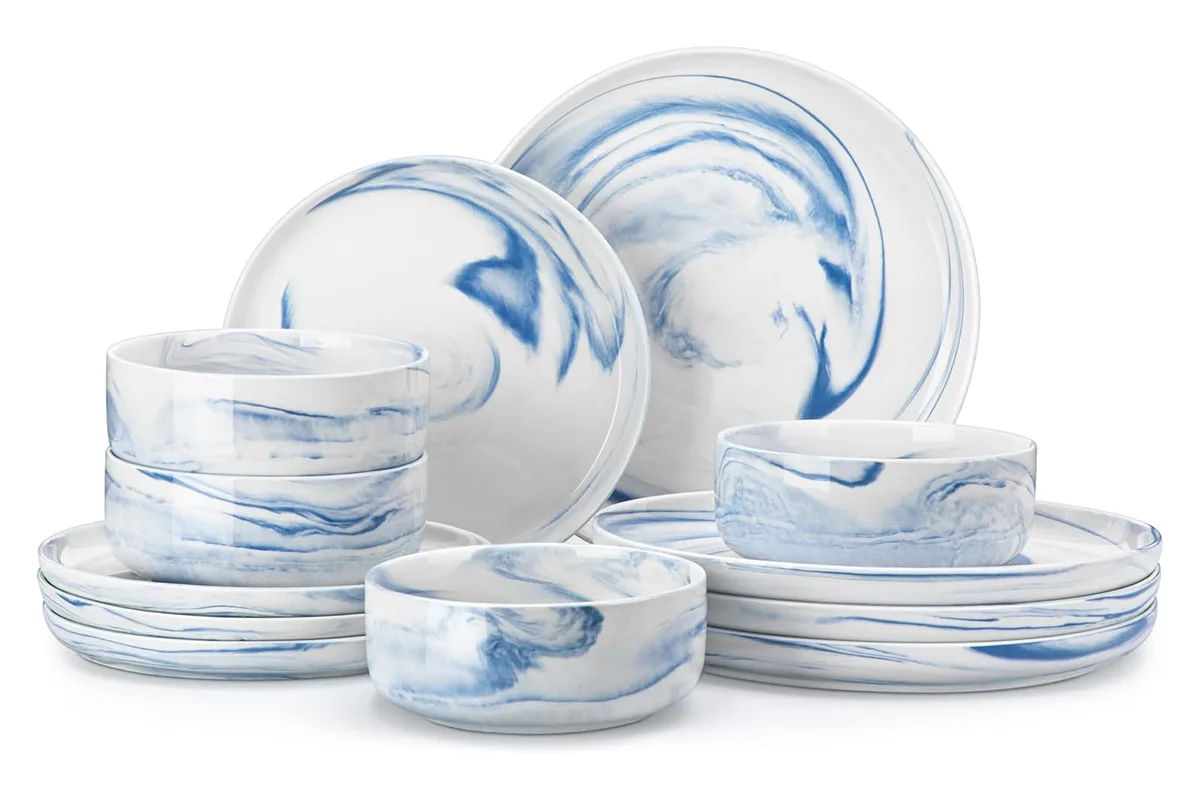
Marble blue porcelain, set for 4

  • 12 porcelain pieces
  • Lead-free glaze that resists chips
  • Dishwasher and microwave safe

Best for a small Friendsgiving or an apartment table, with a coastal, airy feel.

Watch out it serves 4. For 8 guests you need two sets.

Check it on Amazon

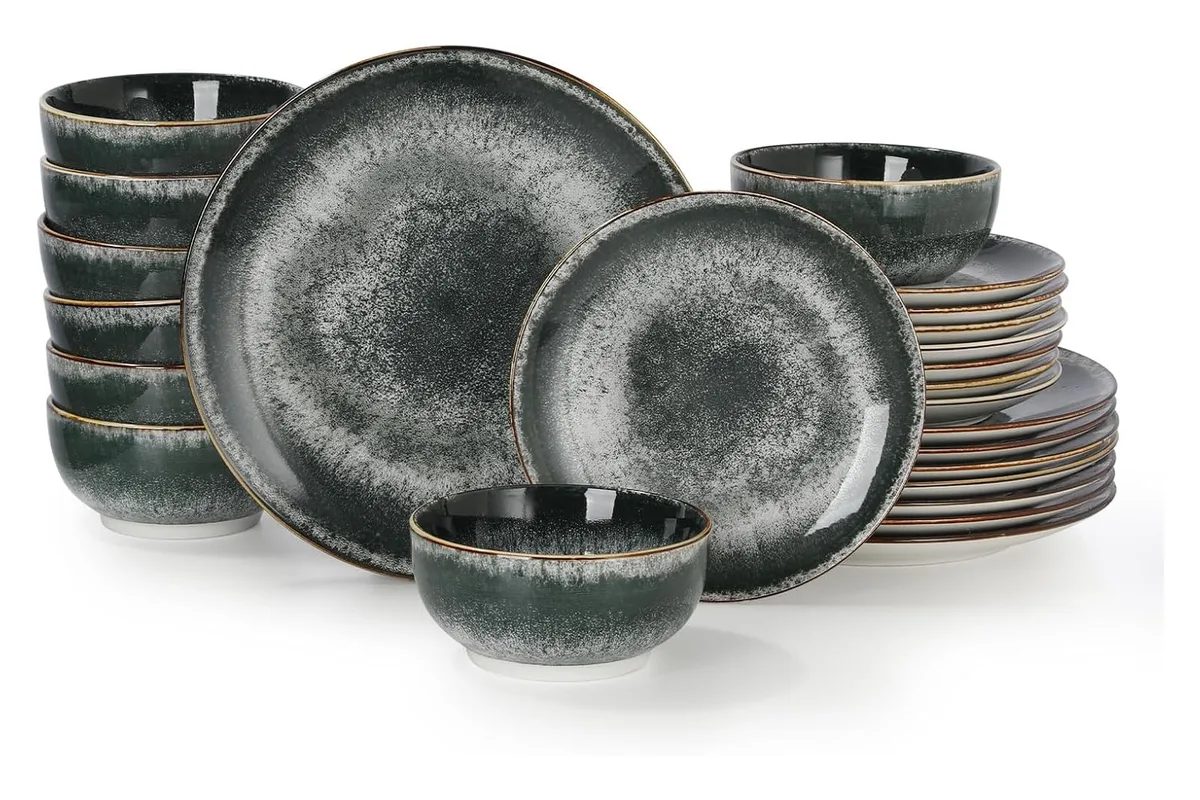
Dark green porcelain, set for 8

  • 24 porcelain pieces
  • Oven, dishwasher, microwave and freezer safe
  • Stacks neatly

Best for a cozy fall table with candles, wood and brass.

Watch out avoid going from freezer to hot oven in one step, whatever the label allows.

Check it on Amazon

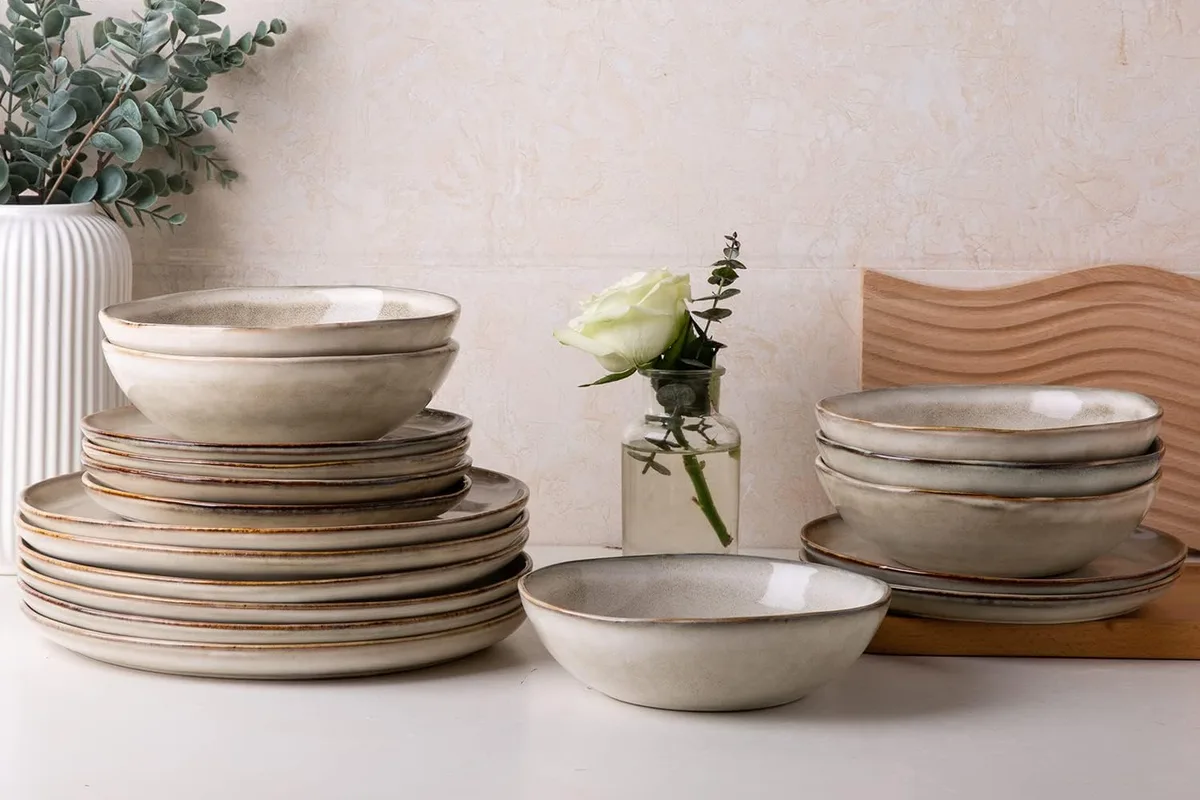
Cappuccino stoneware, set for 12

  • 36 pieces: dinner plates, salad plates, bowls
  • Handmade reactive glaze
  • Lead and cadmium free

Best for big gatherings and a neutral, earthy look that works all year.

Watch out the mugs in some photos are not included, and every reactive-glaze piece looks slightly different.

Check it on Amazon

The flatware that does the styling

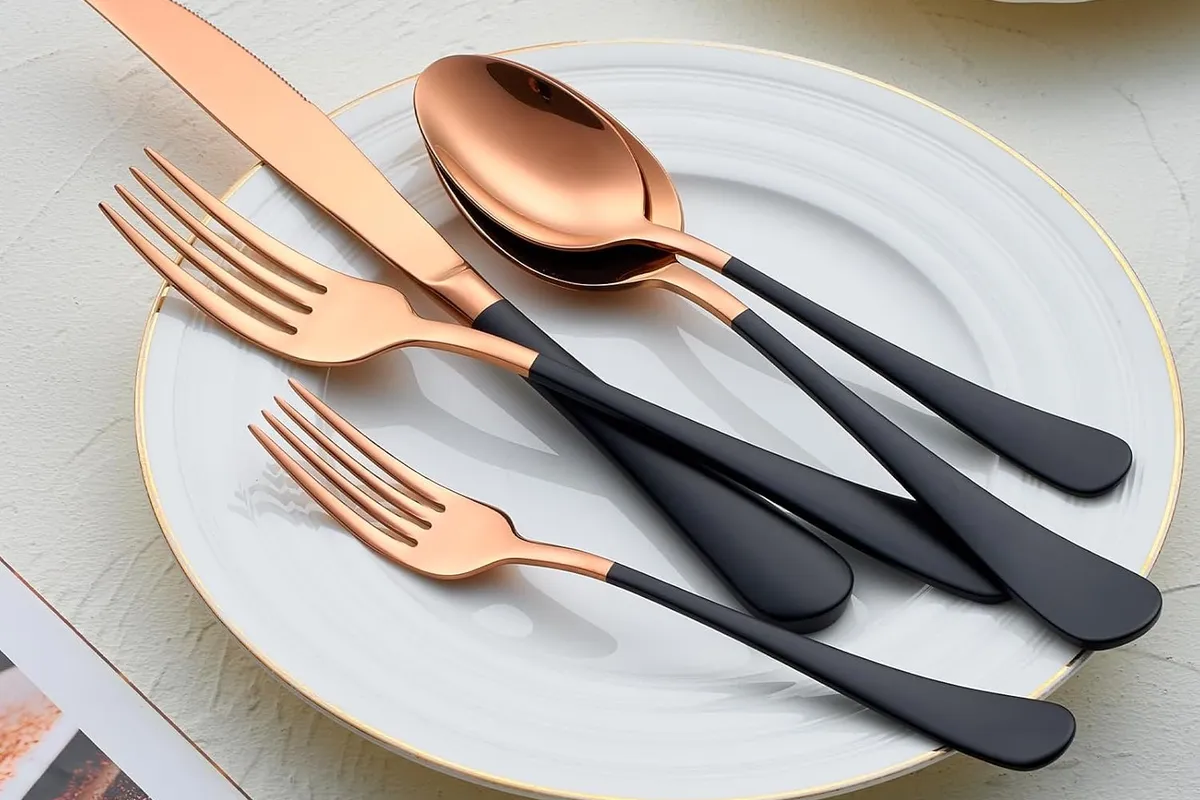
Rose gold and black flatware, set for 4

  • 20 pieces of 18/0 stainless steel
  • Rose gold heads with black handles
  • Service for 4

Best for plain white or neutral plates that need one striking detail.

Watch out service for 4, so plan one set per four guests, and follow the care instructions on the listing to keep the color.

Check it on Amazon

What does 18/0 mean?

It describes the steel: about 18% chromium and 0% nickel. Chromium is what makes stainless steel resist rust. 18/10 flatware adds nickel for extra shine and corrosion resistance, at a higher price. For colored flatware used on special occasions, 18/0 is a sensible choice.

Pair it with the cappuccino stoneware for a warm, candlelit table, or with marble blue for something lighter.

See the three dinnerware sets up close in my countdown video. Shop the video

Quick questions

How many dinnerware pieces do I need for 8 guests?

Look for "service for 8". A 24-piece set for 8 gives everyone a dinner plate, a salad plate and a bowl. Add one or two spare places if you often have extra guests.

Which side does the napkin go on?

On the plate, to the left of the forks or under them. All three are correct in an informal setting.

Can I mix two dinnerware sets?

Yes. Keep one thing in common, such as color family, rim shape or finish, and use the more decorative set for the top layer (salad plate or bowl).

Making the whole room cozy? Read my dining room styling guide.

Sources

  1. Informal Place Setting, The Emily Post Institute
  2. Table Setting Sizes, Dimensions.com
  3. How to Design a Dining Room, Room & Board
  4. Porcelain vs. Stoneware: What's the Difference?, Lenox